
Why Filming Reality Feels Illegal in India

Ext. Paris. Day
A narrow winding cobbled way in Paris.
My Voice
It’s far worse to be poor in a rich country than to be poor in India. To be poor in the spectacular beauty of Paris is like Assamese art cinema trapped inside a Wes Anderson scene. Have you seen Assamese art cinema? I’ve seen one. Water boils.
Cut to a tight shot of water boiling in an impoverished Indian hut.
My Voice
Water keeps boiling. Because it’s art cinema. A melancholy woman combs her long hair.
Zoom out to show a pensive village woman combing her hair, watching water boil.
I was shooting this image in a poor tenement in Noida, for a comic documentary. The actor who had originally come to play the role of a small-town flight attendant was now draped in a rustic sari, her hair oiled. As she combed her hair, the evening light on her face, it was all perfect. This was the sort of scene that traumatized me as a child watching the miserable dreary films that Doordarshan showed on Sunday afternoons in the name of art, and I always wished to lampoon them. Then, things got better, which is unusual when you are filming. There was a lottery moment. In the narrow drain between her and the camera were two dead baby rats. I nudged the cameraman to exploit the gift of the rats. But the line producer said there was no way we could shoot them. That was odd because it was the first time since the shoot began that this exceptional man, who could procure anything you wished for, had said ‘no’. And it was for dead rats in a drain.
Why? Animal cruelty, he said. But the rats were dead. ‘Still,’ he said; if we wanted dead rats, we would have to make prosthetic ones. It would cost thousands of rupees.
My Voice
Melancholy woman combs her hair. Three birds fly in the air. Then everyone dies.
I told the producer, not expecting to be taken seriously, that we needed to shoot three birds. Was that okay? ‘Hmmm,’ he said. ‘...Crows? That was okay. But nothing exotic.’ Could we shoot ants, I asked, certain he’d laugh. Risky, he said. We can’t shoot ants for a documentary? Risky. What about a lizard? No. Too risky.
In theory, I need permission from the Animal Welfare Board only if an animal is going to be procured specially for the shoot. I have the right to shoot strays and cows and donkeys on the road, and of course dead rats, lizards on the wall and of course ants. But in practice this is “risky” because, just as happens in India, anyone who wishes to create trouble is empowered to do so.
Legal teams in studios and platforms, I’m told, have an astonishing ability to detect animals the director himself has not seen. A producer told me that once they had officially used only eight animals but the legal team detected 14, including background dogs and cows and birds. Everything needs clearance, just to be safe.
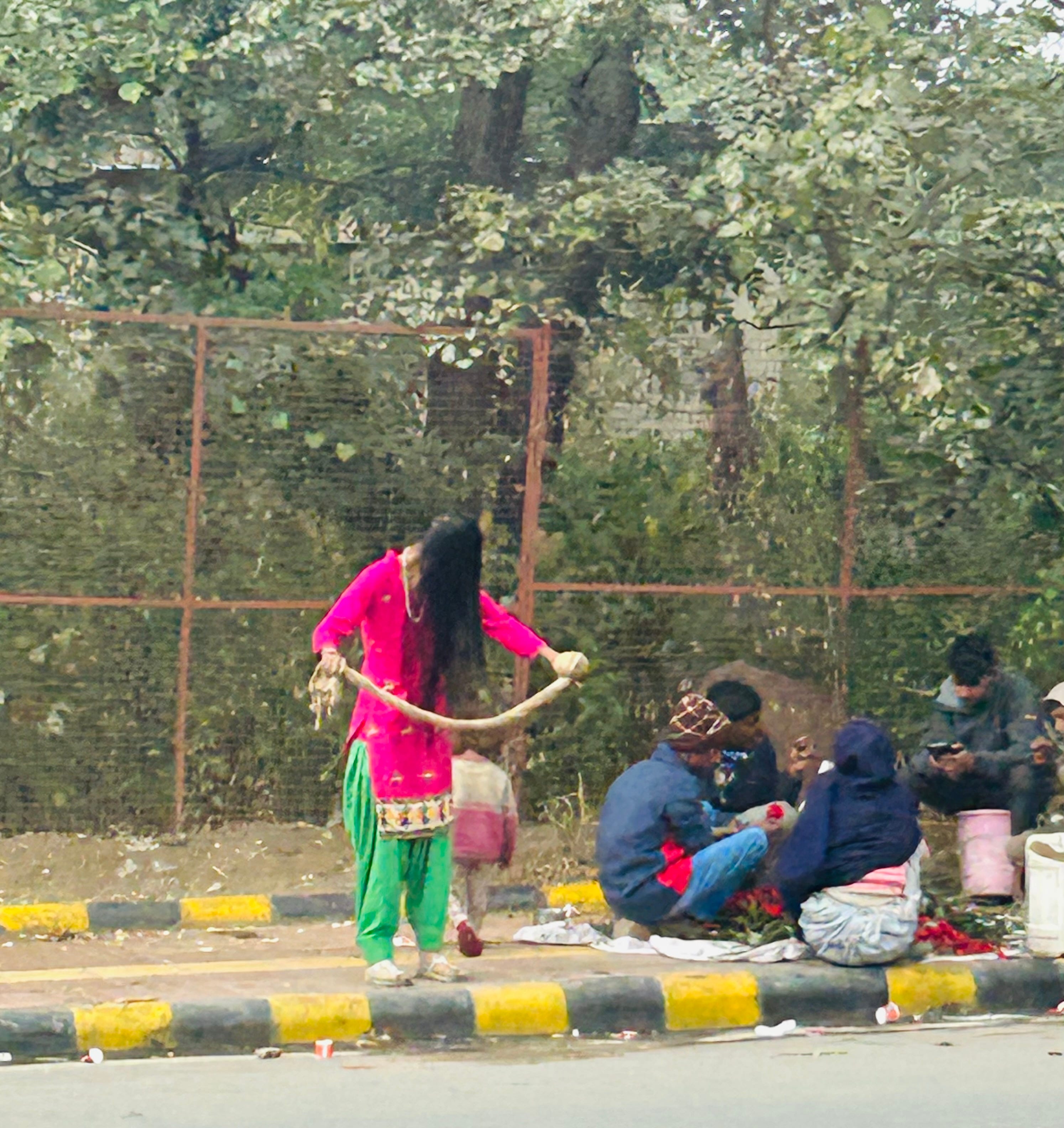
It is not just animals that are painful to shoot. It is also people. You cannot simply go out and film reality in India. Daily life is one of the most agonizing things to portray, documentary or not, if you need to sell your work to a platform or studio. Every identifiable person in the frame must give consent. Or, you must display a visible notice announcing that filming is underway and that entering the space implies consent. This is not a written rule; it is broad production practice. Because anyone can create trouble, and the only person who is not protected in India is the artist. India treats freedom of expression as what remains after every anxiety with a lobby behind it has been appeased. It is the residue of organized caution. That makes it the opposite of freedom. It is not that we do not know what freedom is. We practise it on the roads, through complete civic disorder. Everyone can do anything and mostly get away, as long as there is no accident. This form of chaos in art is freedom of expression. That, we do not have.
Usually, in nations with exemplary laws to guard humans and animals, free speech is protected too. In the US and UK, for instance, you can film people and domestic animals in public spaces. If you are in a public space, you accept that you may be seen.
India has its own reasoning, which is rarely stated clearly. To understand India’s point of view, I made some deductions. Some of it is not hard to see. Animals can be traumatized by film shoots and their use needs to be discouraged. I can also see the point of not letting me use dead rats. There could be filmmakers who would kill rats for such a scene. If there is demand, there will be supply. As for barring even documentary makers from filming ordinary people on roads, I thought a bit about what could be India’s rationale. A producer told me that we can use passersby but must pay them prevailing fees for ‘junior artistes’ (extras). So, the reasoning is this: film units may exploit the gullible, making them stand as background for hours without compensation. That Indians, on their own, stand gaping at news cameras does not alter India’s instinct to protect them from exploitation. Officially, India treats all Indians as children who need to be protected from scammers, themselves, and film crews.
It is not just the State; making things difficult to express yourself is a team effort. Corporations are just as painful. For years now, in my screenplays, I have been trying to promote my suspicion that Zeenat Aman and Parveen Babi are the same person. This is a riff on the findings of my lifelong survey that 50% of Indians cannot tell the difference between the two film stars, especially from still photographs. But studio lawyers or producers raise the red flag. They say I cannot even mention the names of those two stars without their permission. They are wrong, but that doesn’t matter. A writer’s legal argument is no match for a lawyer’s ‘red flag.’ My riff would be considered legally risky because those who represent the actors may claim that I was trying to exploit the actors’ stardom, even if I was only mentioning their names in one scene. This is part of a larger problem that has resulted in Indian cinema and TV failing to capture the essence of our popular culture. If you notice, Indian cinema is a world where there is almost no mention of film stars, films, singers, any other public figure, or real-life events. If, say, my screenplay wants to capture the India of 1975 through the film poster of Sholay or the name of any of its famous songs, or a mention of Amitabh Bachchan, there would be ‘red flags’. In a way, lawyers are paid for red flags, while ideally they should be paid to say, ‘this might be a problem but I can defend you’. This caution is one of the factors that has made the mainstream so dull. It is a bigger commercial risk to make shit than to create something that is exciting, legally permissible, but might trigger a thin-skinned vigilante with high morning cortisol.
In feature films, there is confusion around showing shop fronts and car marques and what exactly constitutes the exploitation of a brand. Publishers must consent if a film character is reading a book. And film crews remove all art that would be visible in the frame, unless approval has been obtained. The law is not so asinine. So long as these objects are not ‘exploited,’ the law lets them be filmed, but the onus of proof is on the filmmakers. The same problem: there is no protection if someone creates trouble.
Because of cinema’s lame-duck existence, a lot of enjoyable stuff has moved underground, despite being legal. For instance, stand-up comedy for live gatherings. Many of these shows do not break a single Indian law, yet they exist underground because above ground there are too many red-flag-wielding lawyers. So, we have an odd situation where real Indian mass culture is consumed not via mass media, but in small private rooms.
(Manu Joseph is a novelist, journalist, and screenwriter. His latest book is ‘Why the Poor Don’t Kill Us’.)
This is v different to what I thought before. I’ve seen blatant plagiarism, abs no asking permission for anything … so it’s interesting to hear this from someone that’s actually filming/ recording.